

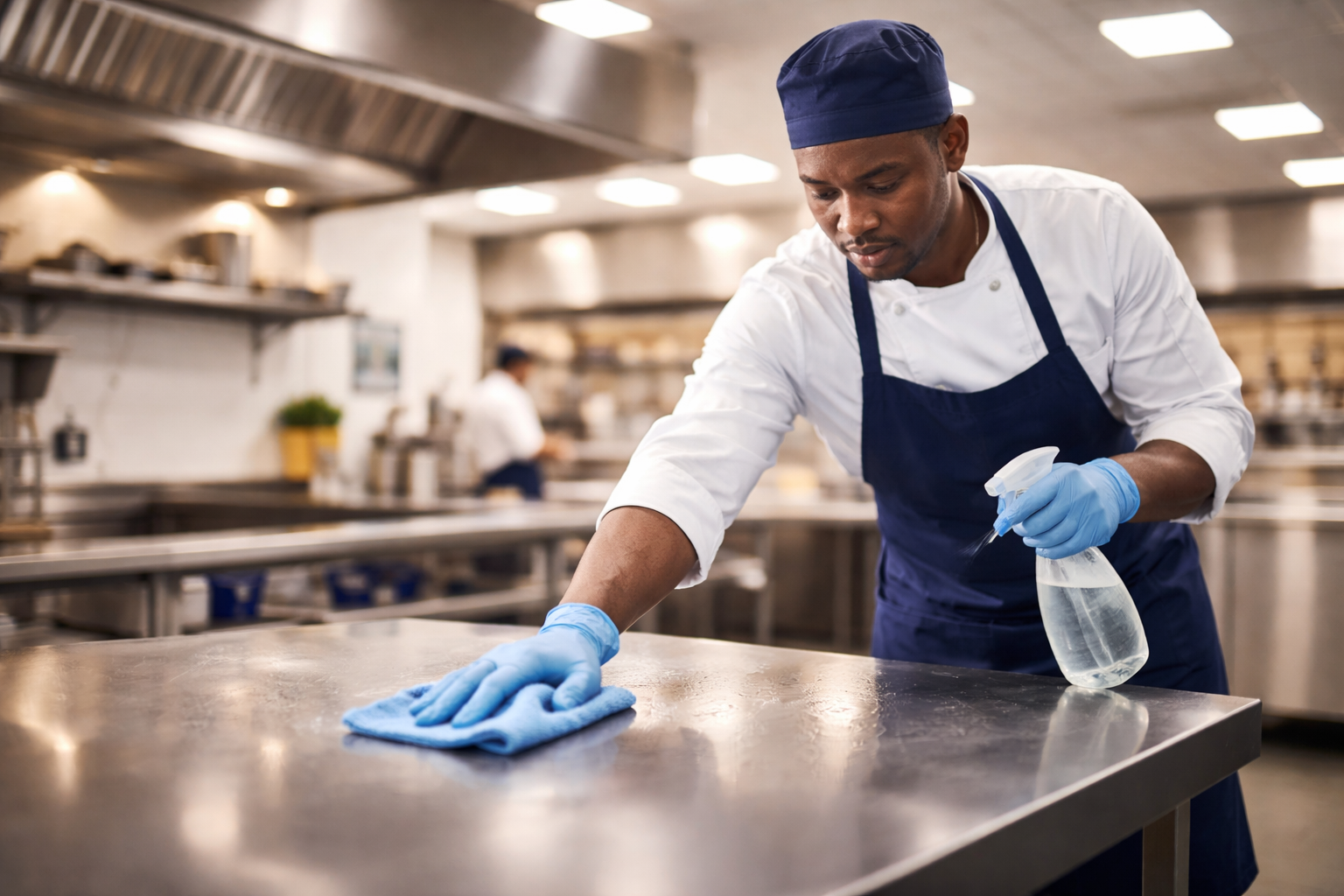
03 Feb Hygiene First: The Role of Cleaning and Sanitation in Food Service
If you run a café, a quick service outlet, or a busy institutional kitchen, hygiene touches everything you do. It protects every guest. It keeps your team safe. It shields your brand from the kind of problems that shut doors. In South Africa, hygiene is not just common sense. It is also part of daily compliance tied to R638, SANS 10049, and SANS 10330. The good news is that a simple, repeatable routine does most of the heavy lifting. Let’s walk through what that looks like in real kitchens.
Cleaning and sanitation, what they mean and why the order matters
These two often get bundled together in conversation, yet they are different steps.
-
Cleaning is the removal of visible soil, food residues, and grease.
-
Sanitation is the reduction of microorganisms on a clean surface to safe levels.
That order matters. If you sanitize over soil, you waste chemicals and leave risk behind. Think of it like washing your hands. Soap first. Rinse well. Then sanitize. Surfaces deserve the same respect.
Why hygiene is a daily non-negotiable in South Africa
Food premises are expected to meet the hygiene requirements in R638. Managers are responsible for structures, layout, handwashing, pest control, temperature control, and staff practices. You also need a Certificate of Acceptability on hand for inspections. SANS 10049 supports those rules with good hygiene practices, and SANS 10330 lays out HACCP so you can manage risk in a structured way. Together, they give you a map. Follow the map and daily service gets easier.
Five pillars that keep kitchens clean, safe, and inspection ready
1) People and habits
Hygiene starts with your team, not your chemicals.
-
Make handwashing a visible ritual. Basins should be easy to reach, stocked with soap and single-use towels.
-
Build quick micro-briefings into shift change. Two minutes on hygiene can prevent a two-day closure.
-
Keep sick staff out of food prep. Create a culture where reporting symptoms is normal and safe.
-
Use clear posters and on-the-job coaching to reinforce the basics. Repetition beats long training decks every time.
2) Facilities and flow
A tidy layout helps staff do the right thing without overthinking.
-
Keep surfaces in good repair. Cracked tiles and failing sealant trap soil and moisture.
-
Separate raw and ready-to-eat activity with distance, tools, and schedules.
-
Control condensation and standing water. Moisture is a fast track for microbes and mould.
-
Light prep areas well. If you cannot see soil, you will not remove it.
3) Planned cleaning, not ad hoc reactions
Guesswork is where hygiene slips. A master cleaning schedule fixes that. For each item, list who cleans it, which product to use, dilution, method, frequency, contact time, and how you verify it was done correctly. Keep it short, clear, and visible.
Every routine clean follows four simple steps:
-
Pre-clean. Scrape and wipe off food and waste.
-
Wash. Use the right detergent and the right contact time.
-
Rinse. Remove residues so sanitizer can work.
-
Sanitize. Apply a food-safe sanitizer, then let it air dry.
Helpful extras that raise your baseline:
-
Colour code tools. For example, red for raw, green for ready-to-eat, blue for general, yellow for washrooms.
-
Replace worn brushes and mop heads often. Old tools spread soil instead of removing it.
-
Label every secondary bottle. No exceptions.
4) Measured sanitation that proves it works
Sanitizing is only as good as your measurements. The fix is simple.
-
Use approved food-contact sanitizers and follow the label. Stick to the correct concentration and contact time.
-
Check concentration with test strips or meters. Record the result, the time, and your initials.
-
Verify cleaning with ATP or contact plates on a routine schedule. Target high-risk zones such as slicers, handles, and prep boards.
-
Calibrate your thermometers and meters. Put the dates in your log.
This data is not “extra paperwork.” It is your proof that the system works when an auditor or retailer asks.
5) Documentation that stands up to inspection
Think of documentation as your kitchen’s memory. File the essentials where any supervisor can find them in seconds.
-
Master cleaning schedule and daily sign-off sheets.
-
Safety Data Sheets, decanting labels, and chemical inventory.
-
Sanitizer concentration logs and corrective actions.
-
Staff training records and competency checks.
-
Verification results, trend charts, and management reviews.
-
Your Certificate of Acceptability and the most recent inspection reports.
If your team can produce these without a scramble, you are already ahead.
Where HACCP fits in and how it helps
HACCP turns hygiene into a managed system. You identify hazards, assign controls, and prove they are effective. Cleaning and sanitation usually sit in your prerequisite programmes from SANS 10049. In some operations, certain steps may support critical control points, for example allergen changeovers or equipment that touches ready-to-eat food. The important part is the link. Your cleaning routine should be visible in your HACCP documentation, and your verification results should feed back into reviews. When you do this well, you catch small issues early. Fewer surprises. Fewer escalations. Less waste.
Practical routines you can start using this week
You do not need a perfect system to begin. Start with a tight checklist and build from there.
Daily checkpoints
-
Open: Handwash stations stocked, sanitizer buckets mixed and labelled, thermometers and probe wipes ready.
-
Every 2 hours: Wipe high-touch points like handles, rails, and touch screens. Check sanitizer concentration.
-
Change of task: Sanitize knives, boards, and small equipment when switching from raw to ready-to-eat.
-
Close: Disassemble equipment, deep clean drains and wall-floor junctions, empty waste areas, and sign off.
Weekly deep clean
-
Canopy and filters, refrigeration gaskets, storage racks, dollies, and pest-risk corners.
-
Photograph before and after for your verification file. Pictures save time during audits.
Monthly technical clean
-
Descale dishwashers and steam equipment. Check seals and coving. Inspect the ceiling structure and lighting housings.
Chemical control
-
Store chemicals in a locked, ventilated space away from food and packaging.
-
Never decant into drink containers. Use purpose made bottles with printed labels.
-
Train staff on first aid and spill procedures. Keep emergency numbers where everyone can see them.
Moisture management
-
Inspect AC drip trays and ceiling panels. Fix leaks fast.
-
Keep cold rooms defrosted and well drained.
-
Use squeegees and floor scrubbers that remove standing water, then record dry time in your log.
Records worth keeping
-
Completed cleaning checklists and any rework notes.
-
Sanitizer readings with initials and times.
-
Calibration certificates and dates.
-
Training attendance and short competency checks.
-
ATP or plate results with simple trend charts that show improvement.
Common pitfalls that quietly raise risk
It is easy to slip on the basics when service gets hectic. Watch for these.
-
Sanitizing on top of soil. If the surface is not clean, sanitizer will not help.
-
Wrong dilution. Too weak is ineffective. Too strong can be unsafe and expensive.
-
Skipping the rinse step. Detergent residue can neutralize sanitizer.
-
Keeping tools past their best. Old mops and brushes hold soil.
-
One person holds all the knowledge. Cross train, document, and rotate duties.
Simple ways to raise standards without slowing service
-
Run a five minute handwashing refresher before the lunch rush and observe technique during prep.
-
Label every secondary bottle in the kitchen and remove any mystery containers.
-
Calibrate all probe thermometers this week and capture the results.
-
Separate raw and ready-to-eat prep with distance, boards, smallware, and clear signage.
-
Ask supervisors to sign off on one deep clean zone per shift until the whole site is at standard.
Bringing it all together
Hygiene is not a weekend deep scrub. It is a daily rhythm that protects people, keeps your certificate valid, and builds trust with your customers. When your team follows the four cleaning steps, measures sanitation properly, and keeps simple records, you make inspections routine. When you link those routines to HACCP, you spot weak points before they become issues. That is how great kitchens stay consistent over years, not weeks.
No Comments