


18 Apr Women in Food Feature: Dessert Trio Ideas Inspired by South African Pastry Talent
There is something powerful about a dessert that feels precise, personal and memorable.
In restaurants, hotels, bakeries and catered events, dessert is often the final impression of the meal. It is the part guests remember after the plates are cleared. That is why pastry has become such an important space for creativity, technique and storytelling in South African food.
The 2024 Food XX Awards, announced by Eat Out, recognised 19 women across South Africa’s food and hospitality industry, including bakers, chefs, food educators, stylists, writers, farmers, entrepreneurs and culinary heritage leaders. The awards specifically celebrate the contribution of women across the food industry, from farming and education to hospitality and chef leadership.
For this Women in Food feature, we are looking at the dessert course through that lens: the discipline, planning and creative thinking that women continue to bring to professional kitchens.
A chef’s table dessert trio is one of the best ways to show that thinking on the plate. It allows a pastry chef to present contrast, elegance and identity in a format that works well for tasting menus, private dining, hotel banquets, restaurants and premium catering.
Why Women in Food Matter to South African Hospitality
Women are not only influencing what appears on the plate. They are shaping how food businesses are built, taught, styled, photographed, supplied, farmed, written about and served.
The 2024 Food XX Awards highlighted this clearly. Megan Wessels of With HÄRT Bakery was recognised in the Baker category, while Jessica van Dyk of Post & Pepper was named Chef of the Year. The awards also recognised leaders across food education, farming, sustainability, food heritage, food styling and front-of-house service.
Modern hospitality is not carried by one role alone. A memorable food experience depends on the chef, the baker, the supplier, the farmer, the stylist, the server, the educator and the operator behind the scenes.
Pastry is a good example of this. A plated dessert may look effortless to the guest, but behind that final plate is a system of ingredient planning, prep structure, storage, portion control, finishing technique and service timing.
That is where professional dessert work becomes more than creativity. It becomes craft.
Why a Dessert Trio Works So Well
A dessert trio gives chefs more range than a single plated dessert.
Instead of relying on one large portion to carry the final course, the kitchen can present three smaller expressions that work together. This gives the guest variety while allowing the chef to show balance, restraint and technique.
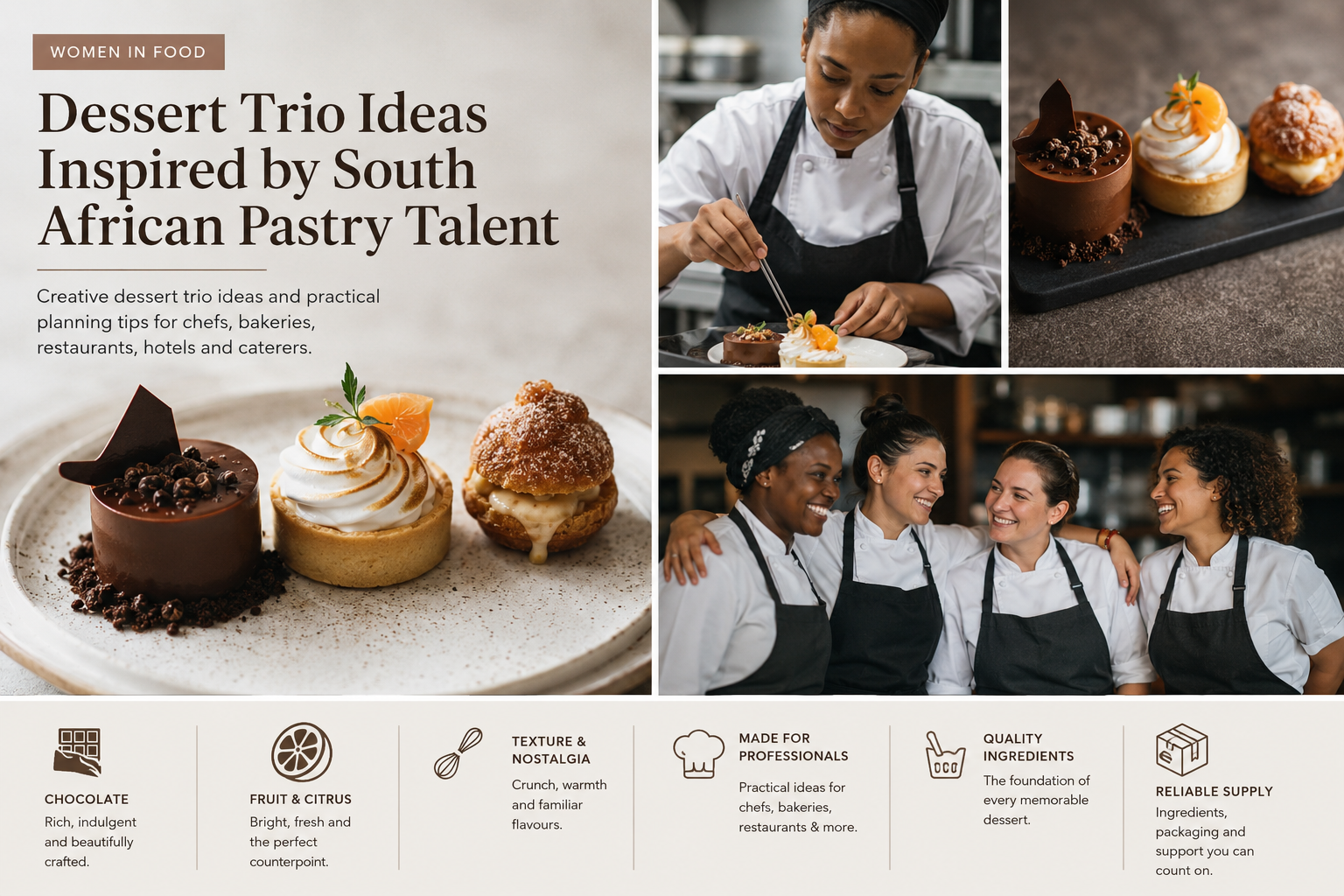
A strong dessert trio usually gives contrast across three areas.
1. Flavour
One element may be rich and chocolate-led. Another may be bright and fruit-driven. The third may bring spice, nuttiness, coffee, caramel, dairy or a familiar South African flavour.
2. Texture
Texture is often what separates an average dessert from a memorable one. A trio allows the chef to combine crisp, creamy, airy, dense, chilled, soft and crunchy elements in one course.
3. Temperature
A chilled mousse, a room-temperature tartlet and a warm pudding-style bite can work beautifully together. Temperature variation keeps the palate interested and gives the course more movement.
For restaurants and catering teams, this structure also helps with service. Not every element needs to be finished at the same time. Some components can be prepared ahead, some can be plated cold, and one final element can bring freshness or warmth at the pass.
A Practical Dessert Trio Structure for Professional Kitchens
A dessert trio does not need to be complicated to feel premium. In fact, the strongest versions are often the most controlled.
Here is a practical structure chefs can use.
1. The Chocolate Centrepiece
Chocolate is often the anchor of a dessert trio because it brings richness, comfort and visual impact.
For professional kitchens, chocolate couverture is especially useful because it gives better control over flavour, melt, finish and texture. It can be used in mousse, ganache, tart filling, glaze, decoration, crémeux, namelaka or tempered garnish.
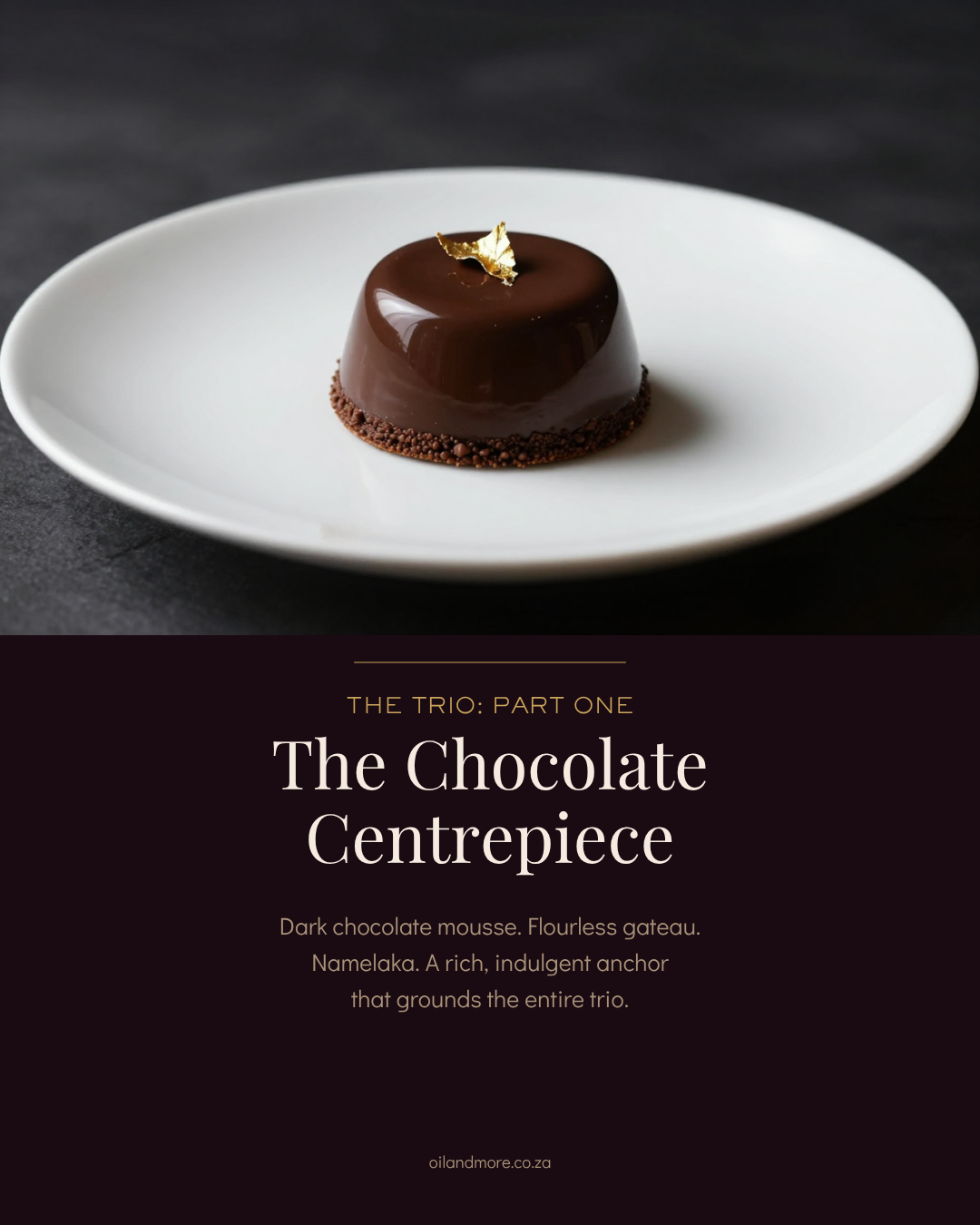
Possible chocolate elements include:
- Dark chocolate mousse with cocoa nib crumble
- Mini chocolate tart with sea salt
- Flourless chocolate cake with whipped cream
- Chocolate namelaka with hazelnut praline
- Chocolate crémeux with biscuit crumb
- Brownie petit four with coffee cream
The key is portion control. In a trio, the chocolate element should feel indulgent without making the whole dessert course heavy.
2. The Fruit or Citrus Counterpoint
The second element should lift the plate.
Fruit, citrus and acidity help balance richer components. This is especially important after a full meal, where guests may want something sweet but not overwhelming.
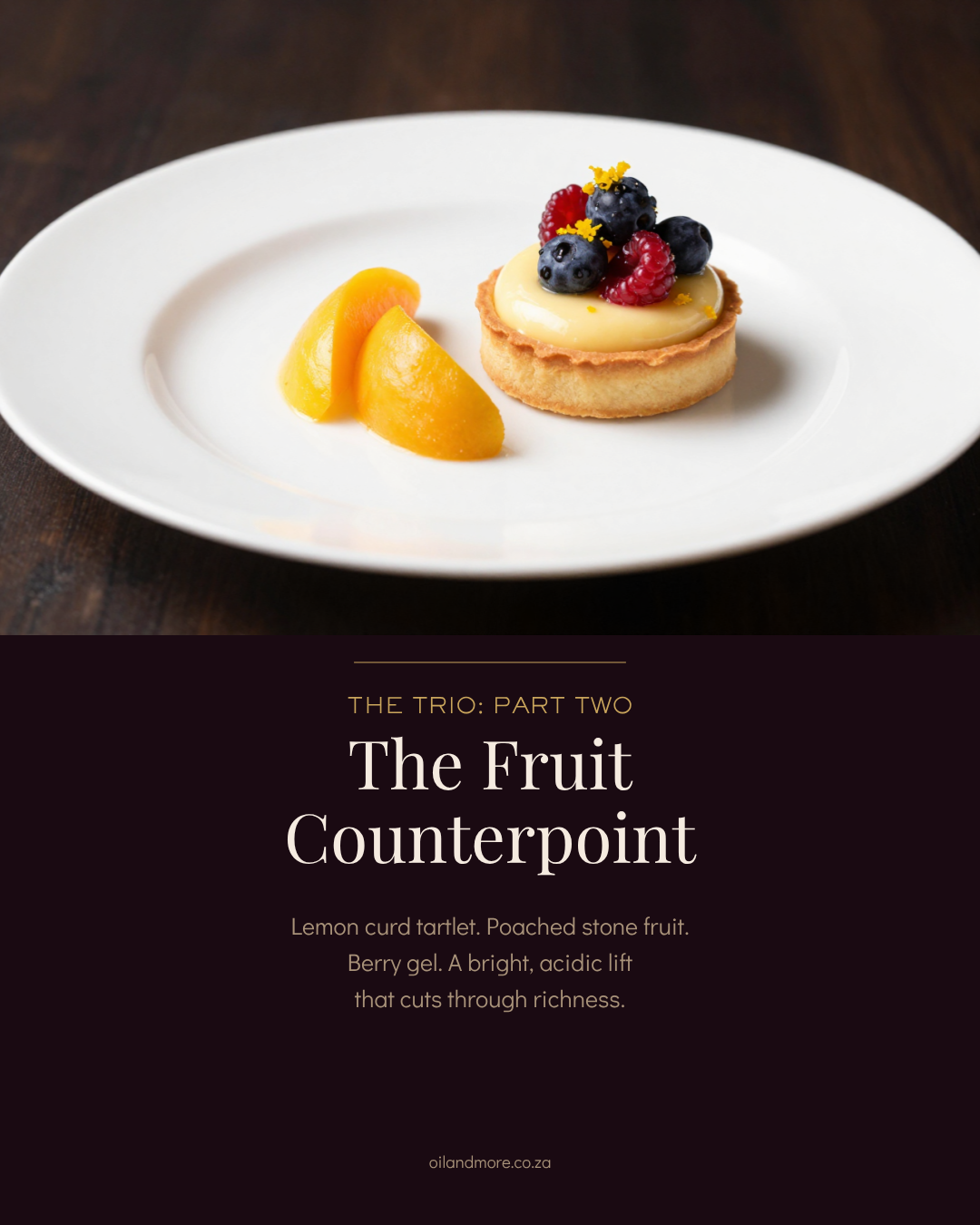
South African kitchens have strong seasonal options to work with, including citrus, naartjie, granadilla, berries, stone fruit, apples, pears and tropical fruit.
Possible fruit or citrus elements include:
- Lemon curd tartlet with brûléed meringue
- Granadilla panna cotta
- Poached stone fruit with mascarpone cream
- Citrus granita with fresh herbs
- Berry gel with vanilla sponge
- Naartjie curd with almond crumble
This element should bring brightness and colour. It gives the trio freshness and prevents the plate from feeling too rich.
3. The Textural or Nostalgic Finish
The third element is where chefs can bring crunch, warmth or memory.
This is often where South African flavour references work well, especially when they are handled with restraint. The goal is not to make the plate feel old-fashioned. The goal is to take something familiar and present it with polish.
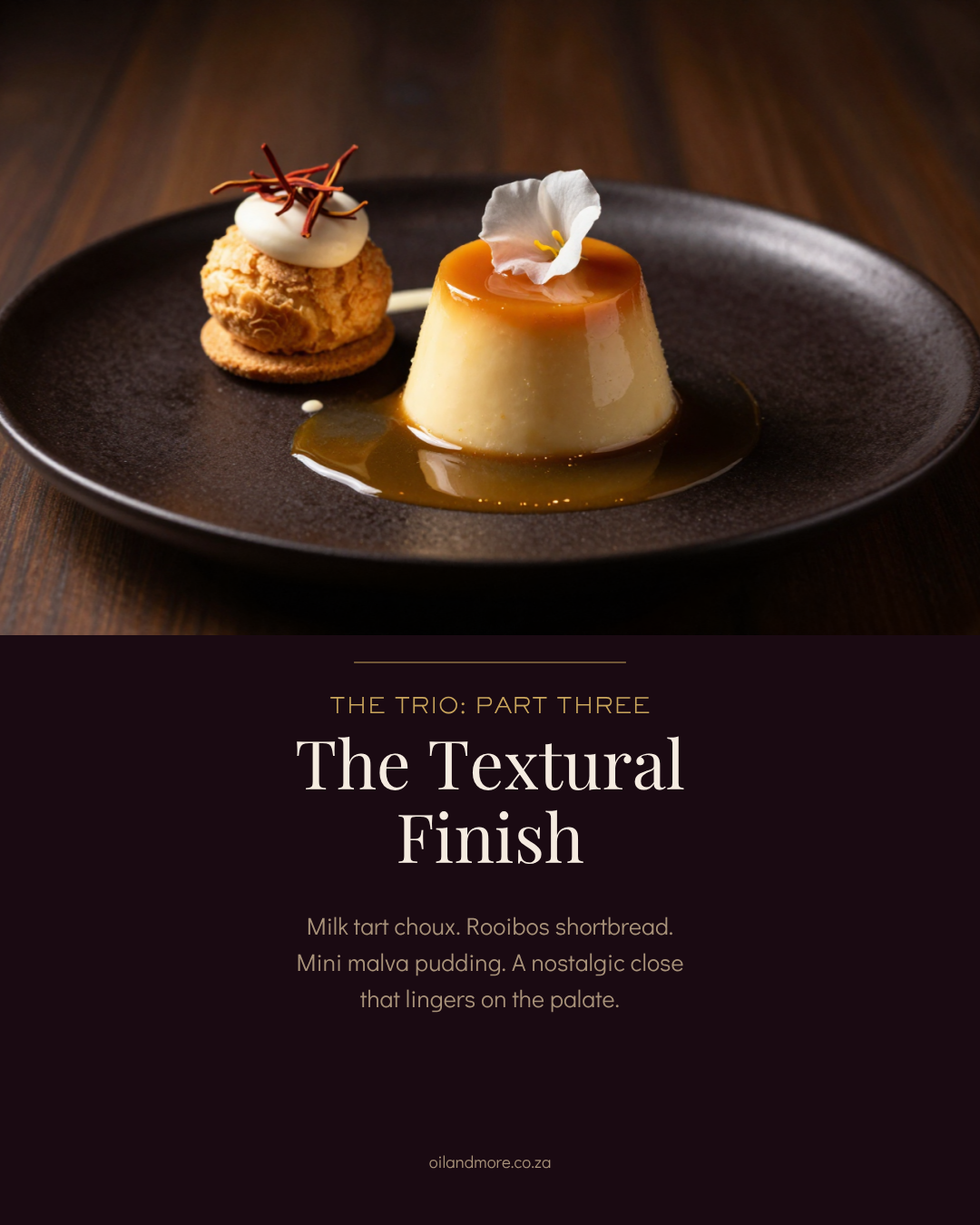
Possible nostalgic or textural elements include:
- Milk tart choux bun with cinnamon sugar
- Mini malva pudding bite with caramelised cream
- Rooibos shortbread with white chocolate
- Almond financier with coffee cream
- Spiced biscuit crumb with whipped ganache
- Coconut and caramel petit four
This final element gives the trio personality. It can be playful, comforting or rooted in local flavour, as long as it still fits the overall plate.
Ingredient Planning Behind a Strong Dessert Trio
A beautiful dessert plate starts long before service.
For chefs, bakers and catering teams, ingredient planning is what makes the difference between a good idea and a dessert that can actually be delivered consistently.
Dessert Bases
Dessert bases give structure to the trio.
These may include sponge, tart shells, biscuit bases, sable, dacquoise, custards, mousses, creams, panna cotta bases, choux pastry or cake layers.
Reliable bases allow chefs to change flavours seasonally without rebuilding every dessert from scratch. For example, one tart shell can carry lemon curd in summer, chocolate ganache in winter or fruit compote for an event menu.
That is useful for:
- Restaurants
- Hotels
- Bakeries
- Function venues
- Caterers
- Private chefs
- Coffee shops with plated dessert offerings
Consistency matters. A dessert base that holds shape, cuts cleanly and plates well gives the kitchen more control.
Dry Goods
Dry goods are the quiet backbone of pastry work.
Flour, sugar, cocoa, nuts, spices, biscuit crumb, gelatine, pectin, coconut, oats and grains all affect texture, stability and finish.
In a dessert trio, dry goods often create contrast. They bring the crunch under a mousse, the crumb beside a curd, the biscuit layer under a tart or the final garnish that makes the plate feel complete.
Good dry goods planning helps with:
- Prep consistency
- Portion control
- Texture management
- Costing
- Storage
- Menu repeatability
This is where professional kitchens cannot afford guesswork. A dessert may be creative, but the back-of-house system needs to be reliable.
Chocolate Couverture
Chocolate couverture has an important role in professional pastry because it behaves differently from standard chocolate.
It is useful for chefs who need a cleaner finish, smoother melt and better performance in tempering, ganache, mousse, glaze, decoration or plated dessert components.
In a dessert trio, couverture can be used as:
- The main chocolate element
- A garnish
- A thin tempered shard
- A ganache centre
- A mousse base
- A glaze
- A tart filling
- A petit-four coating
The better the chocolate behaves, the easier it is for the kitchen to control the final result.
Packaging for Off-Site Dessert Service
Packaging is not glamorous, but it matters.
Many dessert trios are no longer served only in fine-dining restaurants. They may be prepared for private dining, tasting boxes, media drops, events, hotel functions or premium catering.
That means packaging has to protect the dessert without ruining the presentation.
Good dessert packaging should help with:
- Separating delicate components
- Protecting garnish
- Preventing movement during transport
- Keeping chilled items stable
- Supporting neat presentation
- Making off-site service easier
For professional food businesses, packaging is part of the guest experience. If a dessert arrives damaged, the quality of the recipe no longer matters.
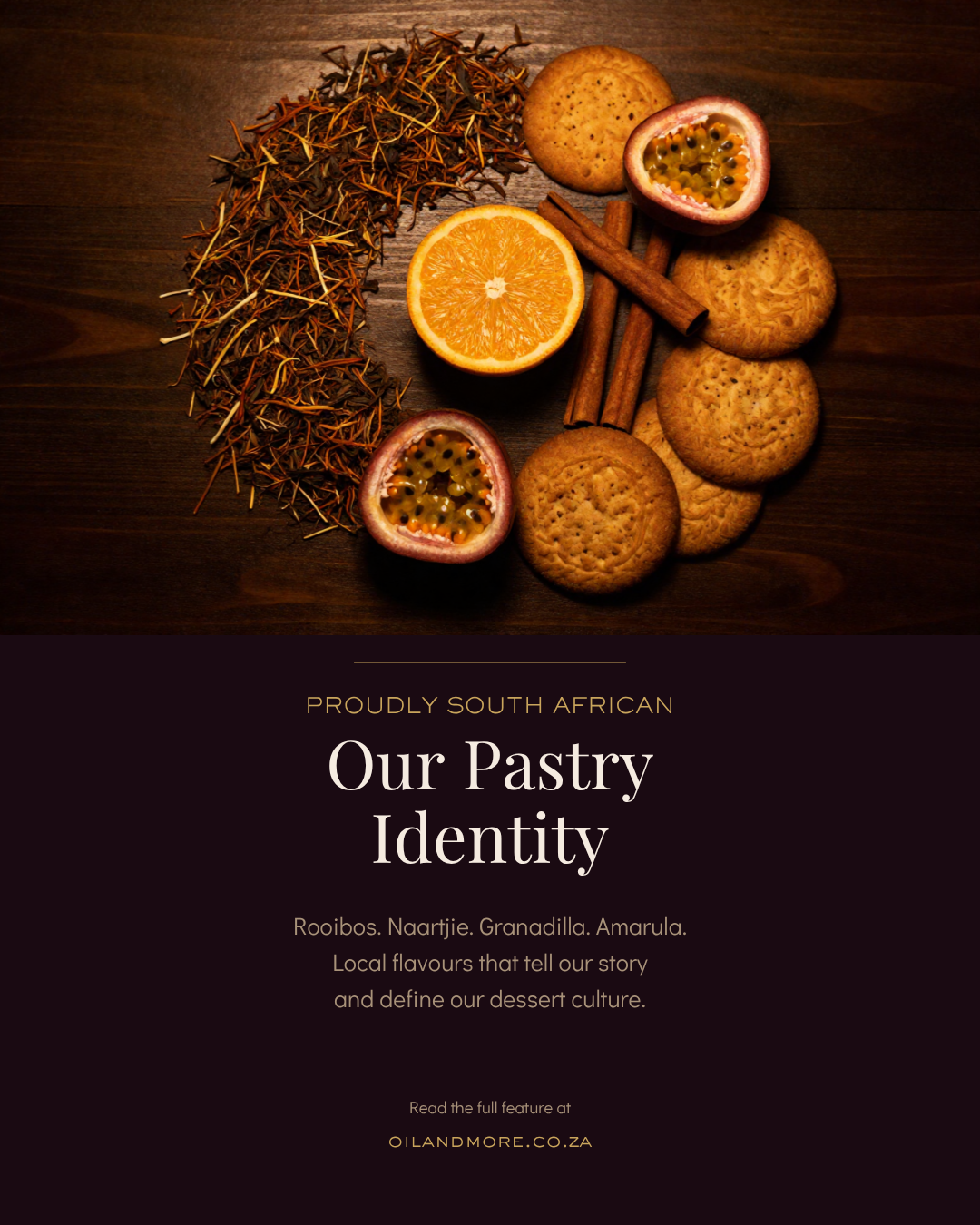
Bringing South African Identity Into Pastry
South African pastry has a strong opportunity to stand out because it can combine classical technique with local flavour.
That does not mean every dessert needs to be obviously traditional. It means chefs can use familiar references with control.
Examples include:
- Rooibos
- Naartjie
- Granadilla
- Milk tart
- Malva pudding
- Koeksister-inspired syrup notes
- Local citrus
- Stone fruit
- Spiced biscuit
- Caramelised dairy flavours
- Coconut
- Coffee
- Nuts
- Honey
The trick is restraint. A modern plated dessert should not feel overloaded with references. One clear local flavour, supported by good technique, is often stronger than five competing ideas.
That is where many strong women-led kitchens and food businesses stand out: not by adding more, but by knowing what to leave out.
A Sample Chef’s Table Dessert Trio
Here is a practical example that could work for a restaurant, hotel or private dining menu.
Element 1: Dark Chocolate Namelaka
Served with cocoa nib crumble and a small tempered chocolate shard.
Purpose: richness, depth and a polished centrepiece.
Element 2: Naartjie Curd Tartlet
Served with brûléed meringue and citrus zest.
Purpose: brightness, acidity and colour.
Element 3: Mini Milk Tart Choux
Filled with cinnamon custard and finished with a light dusting of spice.
Purpose: nostalgia, texture and South African identity.
Together, the trio gives richness, freshness and familiarity without becoming too heavy.
What Chefs Should Consider Before Adding a Dessert Trio to the Menu
A dessert trio may look simple on the menu, but it needs to be planned properly.
Before adding one, chefs should ask:
- Can each component be prepped in stages?
- Will the textures hold during service?
- Can the plate be finished quickly?
- Does the trio work for the kitchen’s staffing level?
- Are the ingredients cost-effective?
- Can it be adapted for events or catering?
- Does it give the guest a memorable final impression?
The best dessert trios are not the busiest. They are the clearest.
Each component should have a reason to be there.
How Oil & More Supports Professional Kitchens
Oil & More supplies food products to restaurants, hotels, bakeries, caterers and hospitality businesses across Cape Town and surrounding areas.
For pastry and dessert work, reliable supply matters. Chefs need ingredients and supporting products that help them prepare, plate, store and serve consistently.
From dry goods and dessert ingredients to packaging and kitchen essentials, Oil & More supports food businesses that need dependable products for daily service, events and menu development.
Professional kitchens move fast. The supplier behind the kitchen needs to understand that.
FAQ
What is a chef’s table dessert trio?
A chef’s table dessert trio is a dessert course made up of three smaller dessert elements. The goal is to show contrast in flavour, texture, temperature and presentation.
Why are women important in South African food and hospitality?
Women play a major role across the industry, from restaurants and bakeries to farming, education, food styling, writing, sustainability, service and entrepreneurship.
What makes a dessert trio successful?
A successful dessert trio should feel balanced. It usually includes one rich element, one fresh or acidic element and one textural or nostalgic element.
Why is chocolate couverture useful in professional pastry?
Chocolate couverture is useful because it offers better performance for tempering, ganache, mousse, glaze, decoration and plated dessert work.
Can dessert trios work for catering?
Yes. Dessert trios can work well for premium catering and private events, but they need strong planning, stable components and suitable packaging.
How can South African flavours be used in plated desserts?
South African flavours such as rooibos, naartjie, milk tart, malva pudding, granadilla and spiced biscuit can be used in refined ways when combined with strong technique and restraint.
A dessert trio is more than a sweet ending. It is a chance for a chef to show balance, discipline and identity.
The best versions do not try to prove too much. They use good ingredients, clear structure and thoughtful presentation to create a final course that guests remember.
As South African women continue to shape food, hospitality, baking, education and culinary leadership, dessert remains one of the most expressive places to see that influence on the plate.
For restaurants, hotels, bakeries and caterers, the opportunity is simple: build desserts that are beautiful, practical and rooted in real flavour.
That is where great pastry becomes more than decoration. It becomes part of the story of the meal.
No Comments