

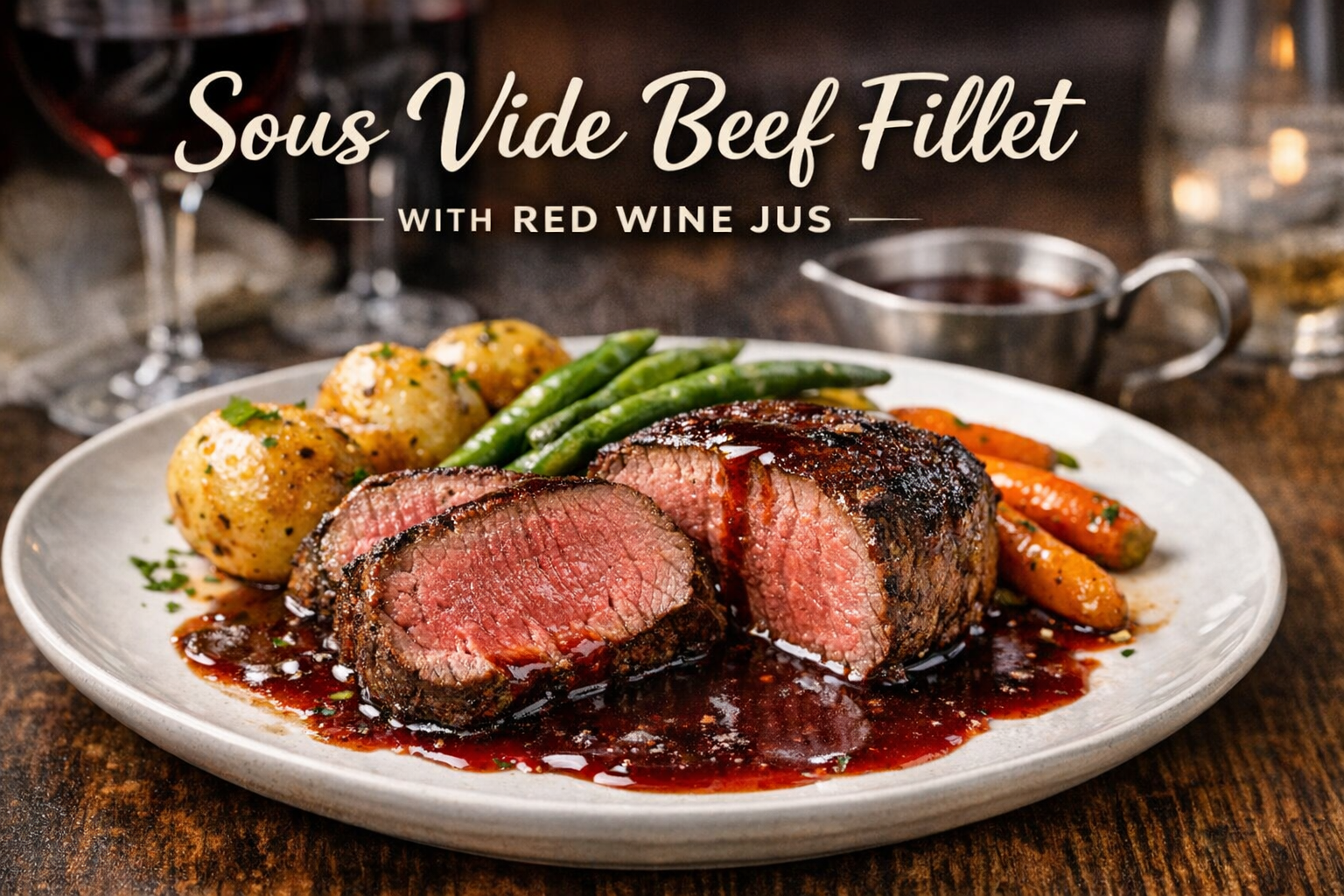
18 Apr Sous Vide Beef Fillet with Red Wine Jus for Elegant Catering Events
A beautifully cooked beef fillet has a way of making any event feel elevated. For caterers and restaurant teams, though, the challenge is never just flavour. It’s consistency, margins, timing, and service pressure. That’s exactly why sous vide beef fillet with red wine jus has become such a dependable fine-dining favourite.
It delivers the tenderness and precision guests expect from an upscale menu, while giving chefs far more control behind the scenes. When you’re planning a wedding, corporate dinner, private banquet, or large-scale hospitality event, that control matters just as much as presentation. A dish that can be prepped in volume, held safely, finished fast, and plated elegantly is worth its weight in gold.
This recipe concept works especially well for catering businesses looking to balance premium appeal with operational efficiency. By using bulk beef cuts strategically, building depth with a demi-glace base, and relying on premium cooking oils for searing and finishing, you can serve a plate that feels luxurious without letting food costs spiral.
Why Sous Vide Beef Fillet Works So Well for Catering
In a busy catering environment, traditional beef fillet service can be risky. Timing has to be exact. Carryover cooking can push meat beyond the desired doneness. One rushed moment on the pass can turn a beautiful centre-cut into an expensive mistake.
Sous vide changes that.
By cooking beef fillet in a temperature-controlled water bath, chefs can achieve highly consistent doneness across multiple portions. Instead of managing dozens of steaks with slightly different pan times and resting windows, the kitchen can prepare fillets in advance and finish them to order with a quick sear.
That makes this approach especially attractive for:
- wedding catering teams serving large guest counts
- restaurant kitchens running banquet menus
- event caterers managing staggered service times
- hospitality venues that need premium results with reduced waste
The result is a dish that feels refined on the plate but performs reliably under pressure.
The Appeal of Beef Fillet on a Fine-Dining Menu
Beef fillet has long been associated with celebratory dining. It’s tender, lean, elegant, and familiar enough to appeal to a wide range of guests. That makes it a smart choice for menus where client satisfaction matters just as much as culinary ambition.
For catered events, beef fillet also offers an advantage in perception. Guests immediately read it as premium. Pair it with a glossy red wine jus, a silky potato element, and a seasonal vegetable garnish, and the plate instantly feels worthy of a high-end event.
That said, fillet is one of the more expensive proteins on the menu, so the execution has to justify the spend. A poor cook on premium beef hurts twice, once in quality, and once in cost. Sous vide helps protect that investment by improving yield, consistency, and portion control.
Building a Cost-Efficient Version Without Losing Luxury
One of the smartest ways to make this dish profitable is to focus on controlled luxury rather than unnecessary excess. Diners remember tenderness, flavour balance, and elegant presentation far more than they remember whether the kitchen overspent.
Here’s where the cost-efficiency comes in.
Use bulk beef cuts strategically
Buying whole fillets or larger primal cuts often gives caterers better pricing than ordering individually trimmed premium portions. Once butchered in-house or by a trusted supplier, those cuts can be portioned to suit the event format.
For plated banquets, a slightly smaller but perfectly cooked medallion often performs better than an oversized portion. It keeps the plate balanced, manages food cost, and still feels generous when supported by rich sauce and thoughtful sides.
Start with a demi-glace base
A full red wine reduction made entirely from scratch for hundreds of guests can be labour-heavy and expensive. Using a quality demi-glace base gives chefs a strong foundation. From there, you can build complexity with red wine, shallots, herbs, roasted bones if available, and finishing butter.
That approach saves time while still producing a jus with depth, shine, and restaurant-level flavour.
Use premium cooking oils where they matter most
Premium cooking oils can improve searing performance and flavour, especially during final finishing. A neutral oil with a high smoke point is useful for achieving a proper crust without bitterness, while a small amount of finishing fat or infused oil can add polish just before service.
The key is using better ingredients intentionally, not extravagantly.
How the Sous Vide Method Improves Consistency
Consistency is everything in banquet service. When 80, 150, or 300 plates need to leave the pass looking identical, there is very little room for guesswork.
Sous vide supports consistency in several important ways:
- each portion reaches the same internal temperature
- proteins can be cooked ahead of service
- holding times are more manageable
- final searing is fast and repeatable
- waste from overcooking is reduced
For medium-rare beef fillet, many chefs target a sous vide bath around 54.5°C to 56°C, depending on the preferred final result and the searing method used afterward. After chilling or holding correctly, the fillets can be dried, seasoned, and seared quickly in a hot pan just before plating.
This keeps service moving without sacrificing precision.
A Practical Production Workflow for Banquets
For large-scale events, success usually comes down to workflow. This dish fits neatly into a production model that allows much of the technical work to happen before service.
1. Portion and season the beef
Trim the fillet carefully, portion evenly, and season with salt, pepper, and optional aromatics such as thyme or garlic. Vacuum seal in batches with a measured amount of fat.
2. Cook sous vide in advance
Cook the portions to the target doneness, then either hold them safely for near-term service or chill rapidly for later regeneration.
3. Prepare the red wine jus separately
Build the sauce ahead of time using demi-glace, red wine, stock, aromatics, and finishing butter. Strain well and hold hot for service.
4. Finish with a fast sear
Just before plating, pat the fillets dry and sear hard in premium cooking oil. Add butter and herbs if desired for aroma and colour.
5. Plate with structured sides
Choose sides that can also handle banquet pacing. Potato purée, dauphinoise, fondant potato, glazed baby carrots, green beans, or seasonal root vegetables all work well.
This workflow gives the kitchen a smoother service window and lowers the risk of quality slipping during the busiest moments.
What Makes a Great Red Wine Jus
A red wine jus should do more than add moisture. It should anchor the dish.
The best versions balance savoury richness, acidity, and body without becoming too heavy or overly sweet. That means reducing the wine enough to concentrate flavour, using a stock or demi-glace base with real depth, and seasoning carefully so the sauce complements the beef instead of overpowering it.
For catering, the sauce also has to perform operationally. It should reheat well, hold its sheen, and stay stable through service. A properly built jus does exactly that.
A few details make a noticeable difference:
- sauté shallots until soft, not burnt
- reduce the wine enough to remove harshness
- strain thoroughly for a refined finish
- whisk in butter at the end for shine and texture
- season lightly, then adjust after reduction
When done well, red wine jus gives the dish its fine-dining identity.
Best Pairings for an Upscale Event Plate
A successful beef fillet plate is all about balance. Because the protein and jus already bring richness, the supporting elements should add contrast in texture, colour, and freshness.
Popular pairings include:
- truffle potato purée for indulgent private dining menus
- dauphinoise potatoes for weddings and formal banquets
- fondant potatoes for a classic restaurant-style plate
- roasted baby carrots or heirloom carrots for colour and sweetness
- charred broccolini or green beans for freshness and structure
- wild mushrooms for earthy depth in autumn and winter menus
The garnish should never feel crowded. Fine-dining presentation depends on restraint. A clean plate with strong component placement usually feels more premium than one overloaded with extras.
How This Dish Supports Restaurant and Catering Profitability
Premium menu items can absolutely be profitable when the kitchen is set up for control. This dish supports margins in several ways.
First, precise portioning helps manage protein cost. Second, sous vide reduces the chance of expensive overcooks. Third, sauce production can be scaled efficiently using a demi-glace base. And fourth, the final dish has strong menu appeal, which supports premium event pricing.
From a sales perspective, sous vide beef fillet with red wine jus works because it speaks to both clients and guests. Clients see an elegant, recognisable centrepiece for their event. Guests experience a tender, richly flavoured plate that feels celebratory.
That combination makes it a strong candidate for:
- wedding menus
- gala dinners
- executive corporate events
- private chef catering packages
- seasonal fine-dining banquet menus
Common Mistakes to Avoid
Even a reliable dish can lose impact if the details are missed. A few common issues come up repeatedly in banquet service.
Over-searing after sous vide
The beef is already cooked to temperature, so the sear should be quick and intense. Too long in the pan can push the fillet past the target doneness.
Wet meat going into the pan
If the fillet isn’t dried properly after the bag is opened, it will steam instead of sear. That means less crust and weaker flavour.
Thin or overly salty jus
Reduction changes seasoning dramatically. Build the sauce carefully and adjust salt only after the flavours have concentrated.
Oversized portions
Large portions increase cost and can slow plating. A well-sized medallion with refined sides often looks more elegant and performs better.
Poor holding strategy
No matter how well the beef is cooked, poor holding can flatten the final result. Plan the regeneration, searing, and plating sequence in advance.
FAQ
Is sous vide beef fillet suitable for large banquets?
Yes. It’s one of the most practical premium beef options for banquets because it allows for advance preparation, consistent doneness, and faster finishing during service.
Can red wine jus be made ahead of time?
Yes. In fact, it usually benefits from being made ahead. It reheats well and gives the kitchen one less last-minute component to worry about.
What sides work best with beef fillet for catering?
Potato purée, dauphinoise, fondant potato, glazed carrots, green vegetables, and mushrooms all pair well. The best choice depends on the event style and service format.
Is beef fillet too expensive for catering menus?
Not necessarily. It can work very well when portions are controlled, bulk cuts are sourced intelligently, and the production method reduces waste.
Why is sous vide good for restaurant beef fillet service?
It improves consistency, protects yield, and makes it easier to deliver the same doneness across multiple covers or event plates.
A Reliable Fine-Dining Favourite That Scales
Sous vide beef fillet with red wine jus earns its place on a catering menu because it brings together elegance and practicality. It looks premium, tastes luxurious, and fits the real demands of high-volume service. That balance is what makes it such a smart choice for chefs, caterers, and hospitality teams who need dishes that impress without creating unnecessary risk.
When built with thoughtful sourcing, a well-structured production plan, and disciplined plating, this dish becomes more than a classic. It becomes a scalable signature that works from intimate private dinners to large banquet halls.
For catering businesses refining a fine-dining menu, it’s the kind of plate that helps clients say yes with confidence.
No Comments