

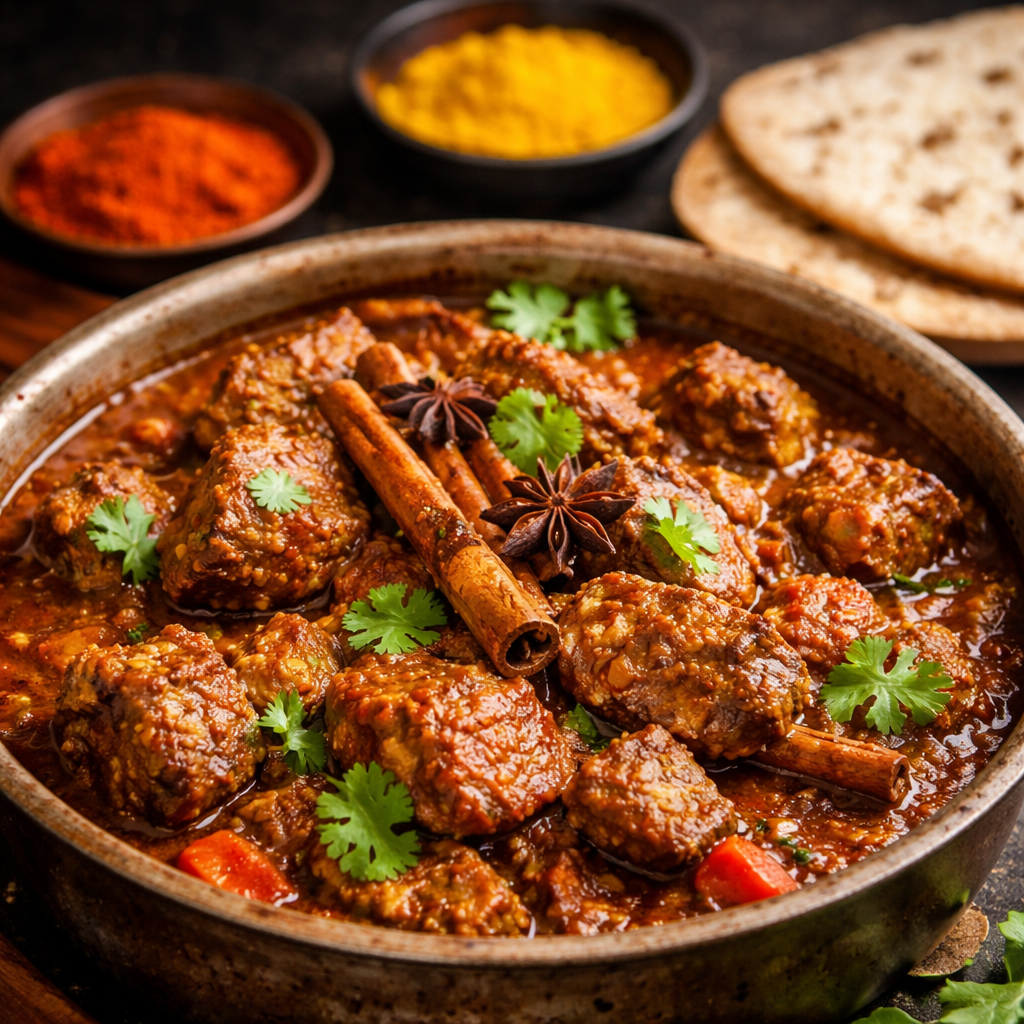
26 Mar Cape Malay Lamb Curry with Bulk Spice Mix
Cape Malay Lamb Curry with Bulk Spice Mix
Cape Malay cuisine is one of South Africa’s most distinctive culinary traditions, and lamb curry sits at its heart. The flavour profile, built on layered spice rather than heat, aromatic whole seeds bloomed in fat, and slow-cooked protein that collapses rather than breaks, is immediately recognisable to guests and deeply satisfying across every service context from wedding banquets to hotel dinner service.
The challenge for a professional kitchen is translating that authenticity into a production system that holds up at scale. A curry that works for a family of eight requires a fundamentally different approach when you are producing for 250 covers, and the decisions you make at the buying and prep stage determine whether the finished dish carries genuine flavour or just colour.
This guide covers the sourcing logic, spice blend construction, lamb cut selection, production sequencing, and holding protocols for bulk Cape Malay lamb curry in a professional catering context.
Understanding the Flavour Architecture
Before thinking about scale, it is worth understanding what creates the distinctive Cape Malay flavour profile at a fundamental level. The cuisine draws on the spice traditions brought to the Cape by enslaved people and political exiles from Southeast Asia, the Indian subcontinent, and East Africa during the 17th and 18th centuries. It absorbed indigenous ingredients and the influence of Dutch colonial cooking over generations, producing a style that is aromatic and warm rather than fiery.
The key flavour pillars are:
- Warm whole spices bloomed in fat at the start: cinnamon sticks, cardamom pods, cloves, and bay leaves
- A ground spice base that includes turmeric, coriander, cumin, ginger, and a mild chilli
- The Malay-specific additions: naartjie or orange peel, fennel seed, and, in some traditions, a small addition of tamarind for sourness
- Slow cooking that allows the spice compounds to fully integrate into the protein and sauce
When you scale this for catering, the temptation is to multiply the recipe and hope the flavour follows. It does not. Spice compounds behave differently in large volumes of liquid, and what reads as balanced in a small pot can taste flat or medicinal when scaled tenfold. The solution is in how you build and manage your spice blend.
Building a Bulk Spice Blend for Catering
Why Pre-Blending Matters
For any kitchen producing Cape Malay curry at catering scale, pre-blending your spice mix in bulk is the single most important step for consistency. Individual measurement of eight or nine spices per batch introduces error under service pressure and makes it impossible to reproduce the same flavour profile reliably across events.
A pre-blended dry spice mix, made to a documented ratio, measured by weight, and stored correctly, solves the consistency problem and significantly speeds up production.
Base Blend Ratios per 100g Finished Mix
- Coriander, ground: 30g
- Cumin, ground: 20g
- Turmeric: 15g
- Ginger, ground: 10g
- Cinnamon, ground: 8g
- Fennel seed, ground: 6g
- Mild chilli powder: 5g
- Cloves, ground: 3g
- Cardamom, ground: 3g
Bloom this blend in a neutral oil before adding liquids. Direct contact with heat in fat causes the Maillard reaction to develop the spice compounds fully. Adding ground spices to a wet curry without blooming produces a raw, slightly dusty flavour that persists even with long cooking. For catering batches, bloom 100g of spice blend per 5kg of raw lamb in the cooking fat before adding onion or any liquid.
Selecting the Right Lamb Cuts
Shoulder is the correct cut for Cape Malay curry at catering scale, not leg and not loin. The collagen and fat distribution in the shoulder produces a sauce that is naturally glossy and rich, and the protein breaks down correctly during the long braise without becoming dry or stringy.
For boneless production suitable for catering, specify diced shoulder at 40 to 50mm cubes from your bulk meat supplier [LINK: bulk protein and frozen goods]. Plan approximately 180g of raw boneless lamb shoulder per portion. A standard catering batch for 50 covers requires roughly 9 to 10 kg of raw diced shoulder, accounting for approximately 30 percent yield loss during cooking.
Production Sequencing for Large Batches
Day One: Spice Prep and Marination
For events of 100 covers or more, begin production the day before service. Season and marinate the diced lamb overnight in yoghurt, half the spice blend, salt, and a small amount of naartjie or orange zest. Overnight marination in an acidic medium tenderises the exterior of the meat and allows the spice compounds to begin penetrating the protein before cooking starts.
Day Two: Production
- Bloom whole spices (cinnamon sticks, cardamom pods, cloves, bay leaves) in neutral cooking oil. 3 minutes over medium-high heat until fragrant.
- Add finely diced onion. For a 50-cover batch plan approximately 2 kg. Cook until deeply golden, not just translucent. This step cannot be rushed.
- Add crushed garlic and grated fresh ginger. Cook for 90 seconds.
- Add the ground spice blend and bloom for 60 to 90 seconds, stirring continuously. The mixture will look dry and sandy. This is correct.
- Add the marinated lamb. Seal in the spice paste for 4 to 5 minutes before adding any liquid.
- Add crushed tinned tomato, approximately 400g per 5 kg of meat. Allow to reduce by one-third before adding stock.
- Add warm lamb or chicken stock to just cover the meat. Bring to a simmer, cover, and braise for 90 to 120 minutes until the lamb is completely tender.
- Taste for seasoning. The sauce should be thick, glossy, and deeply aromatic. If it is too thin, remove the lid and reduce for a final 15 to 20 minutes.
Holding, Chilling, and Reheating
Cape Malay lamb curry holds and reheats exceptionally well, which makes it one of the most practical large-format dishes in a catering kitchen. The flavour actually improves after a 24-hour rest as the spice compounds continue to develop.
Cool batches rapidly in shallow containers, maximum 80mm depth, to reach below 5 degrees Celsius within 90 minutes. Reheat in tilting pans or bain-marie to 75 degrees Celsius minimum, stirring gently to prevent the sauce from catching on the base. The curry can be held frozen for up to 8 weeks at -18 degrees Celsius. Thaw under refrigeration for 24 hours before reheating.
Packaging and Transport for Off-Site Catering
For off-site events, pack the curry into food-safe aluminium containers with sealed lids immediately after the final reheat check. Aluminium retains heat well, stacks cleanly in transport boxes, and can go directly into chafing pans on arrival at the venue. Label each container with the dish name, batch date, reheat temperature, and allergen information.
Oil and More supplies bulk dry goods and spice range inputs used in central kitchen operations across the Western Cape, along with food packaging and aluminium containers suitable for catering transport and chafing service. Contact Oil and More to discuss supply volumes and delivery schedules for your operation.
Frequently Asked Questions
How do I prevent the spice mix from tasting raw in a large batch?
The most common cause is insufficient blooming. In a large pot, the oil temperature drops significantly when spices are added. Work in smaller quantities of oil at higher heat, bloom the spice blend before adding onion, and ensure the onions are cooked to a deep golden colour before any liquid is introduced.
Can I substitute lamb shoulder with a cheaper cut for budget events?
Lamb neck is the most practical substitute. It has a similar collagen profile to the shoulder and produces comparable tenderness with the same cooking time. The yield loss is slightly higher due to bone, so account for this in your raw weight calculations. Avoid the leg for slow-cooked curry as it dries out under extended heat.
How should I adjust spice quantities when scaling to 200 covers?
Spice does not scale linearly in water-based cooking. A reliable rule of thumb is to use 75 percent of the mathematically scaled quantity and taste before service. This accounts for the dilution effect of larger volumes of liquid and the fuller development of spice compounds in a large pot.
What is the correct accompaniment for a catering buffet format?
Yellow rice with raisins is the traditional and most appropriate accompaniment for Cape Malay lamb curry in a formal catering context. Sambals, particularly a tomato and onion sambal, and a cucumber raita, cut the richness of the curry and are expected by guests familiar with the cuisine.
Is it appropriate to offer Cape Malay lamb curry at a formal dinner service?
Yes, with thoughtful plating. For a plated dinner, reduce the sauce further for a more concentrated, glossy consistency, plate 150g of meat on a ramekin of yellow rice, and finish with a small sambal and a coriander leaf.7h’
No Comments